I Learned the Hard Way So You Don’t Have To
I started managing people at twenty-three.
Someone handed me the keys to a twenty-four-hour retail store and said something vague, like: “You’ll figure it out.”
No structured training. No framework. No warning that I was about to become responsible for both other people’s rent money and emotional well-being.
Just a title, a building that never gave me a break, and a quiet assumption that competence would magically transfer from “good at the job” to “good at leading humans.”
Spoiler alert. It did not.
I cried during my first staff firing. Not a dignified Demi Moore slide. Ugly crying, while the person on the other end of the phone told me they understood (sorry again, Jenny, wherever you are). I teared up during the next one. And a little less the next. I had to start saving my tears or risk dehydrating. At one point I was firing someone every other month. Seriously. Talk about a learning curve - and bad hiring practices, but that’s a story for another day.
When I later moved into a different sector, I went the opposite direction. I decided I had to be firm if I wanted people to respect me. I was a woman in a predominantly male-dominated field, so I buttoned up those tears faster than I could tie an apron. I walked in thinking strong leadership meant being a bit of a bully. Ok, being a chef kind of taught me that regardless.
I was decisive and ready to shut things down quickly. People out of line? Get them back there fast. No hand-holding. This was not empathy camp. That approach absolutely worked.
Briefly.
It also caused damage I didn’t fully understand until much later, when I had the benefit of hindsight, humility, and several “oh… that was not ok” moments to reflect on.
Here’s what no one explains nearly enough, even with all the leadership training out there. Cultures are not broken because employees fail to live the company’s values. They are broken when people are thrown into tasks/roles without support, appreciation, or clarity. They break when leaders do not lead with intention.
I thought my intentions were solid throughout my career. I cared. I worked hard. I wanted things to run well. But I didn’t know how to actually lead with intention. I took advice from higher-ups who preached solving the problem and moving on. It was easier not to become obsolete if you kept your cards close to your vest. Staying the smartest person in the room turned out to be a terrible long-term strategy.
Because staying the smartest person in the room doesn’t build teams. It builds dependence. Work only moves when you are present, on guard, and probably exhausted. It also teaches people not to bother thinking for themselves thank you very much.
At the time, though, I didn’t know how to slow myself down enough to decide how I wanted to show up before stress made that decision for me. I didn’t know how to translate expectations that felt obvious in my head into clarity that actually landed. And I didn’t understand that trust isn’t built through a title, but through consistency, predictability, and follow-through.
So, I lead on instinct. Sometimes that meant being too soft. Sometimes too sharp. Both left people guessing. And people who are guessing don’t feel safe. They don’t take risks. They don’t speak up early. They don’t stay cohesive when things get hard. Culture….broken.
Looking back, the problem was never that I cared too much or pushed too hard. It was that I didn’t yet understand how intention, clarity, trust, and cohesion actually connect in real leadership.
That took years to learn. Mostly the hard way.
What I eventually learned is that leadership doesn’t need more confidence or charisma. It needs structure.
The leaders I see struggle most are not careless or underqualified. They are thoughtful people who were promoted for being good at the work and then left to figure out the rest on their own. They are trying to lead fairly, keep things moving, and not accidentally trash the place, all at once.
That’s a hard job to improvise.
Good God, if someone had just handed me a practical guide early on about how shift from friend or peer into leadership I would have kissed them on the mouth. (HR was more lenient back then). I definitely would have caused less harm along the way.
So, I built one. And every time I’m able to clarify something: from ‘let’s figure out how you want to show up as a leader’ to ‘this is how you coach through performance concerns’ I see 23 year old me looking on proudly. And a little pissed I didn't figure it out sooner.
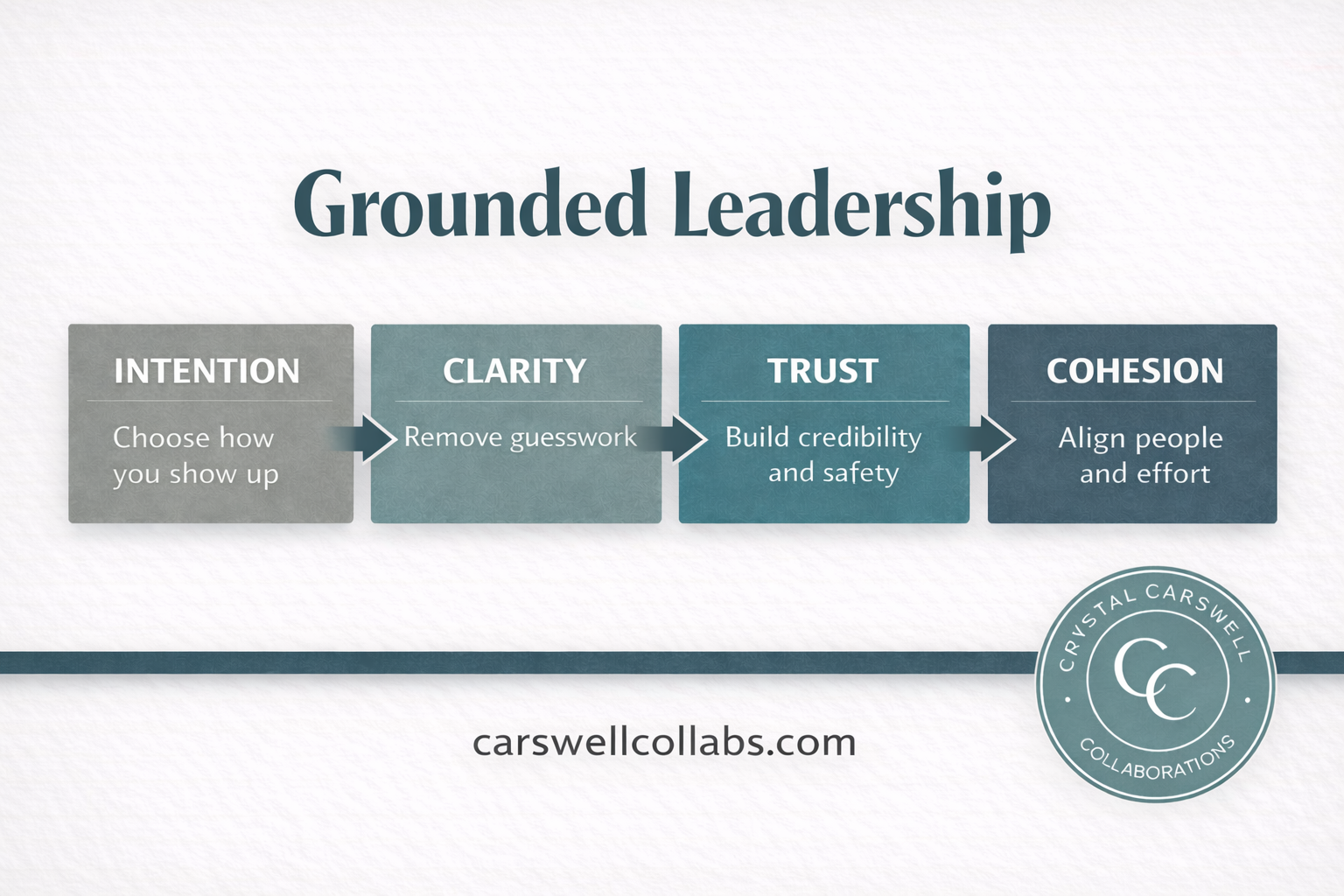
Grounded Leadership Model Framwork
